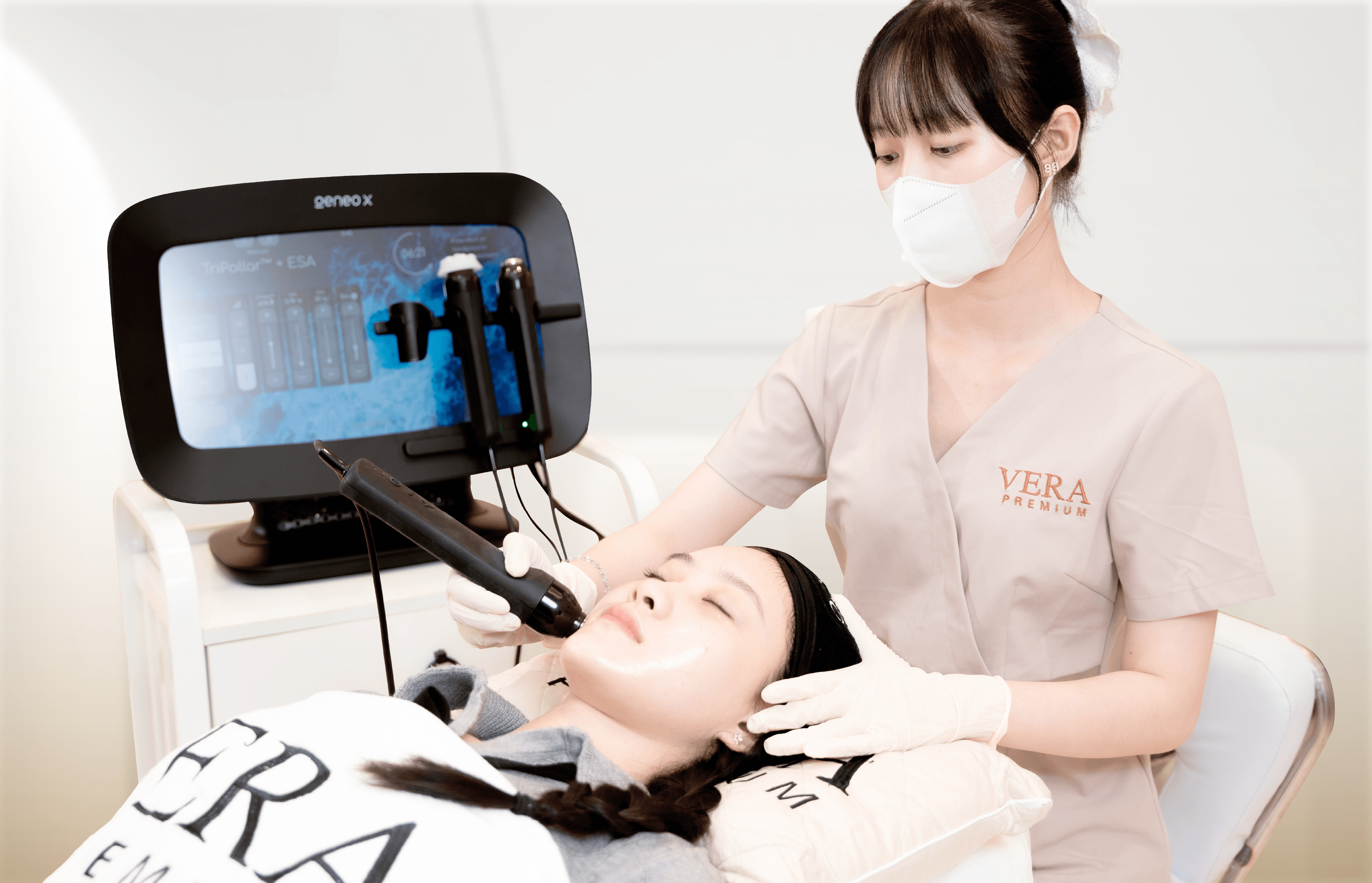


Is pigmentation laser dark skin tone treatment safe? It can be, but only when the device, wavelength, energy and technique are matched to your skin. Darker skin reacts to laser light differently from lighter skin, and the wrong settings can leave a mark darker than the one you wanted to treat. This guide from Vera Premium explains why, what risks to know about and which questions to ask before you agree to any laser in Cambodia.
How Is Dark Skin Different When Lasers Are Used?
Most laser pigmentation treatments work by sending light that pigment absorbs. The question for any pigmentation laser dark skin tone plan is simple: if your skin naturally contains more pigment, where does the light go?
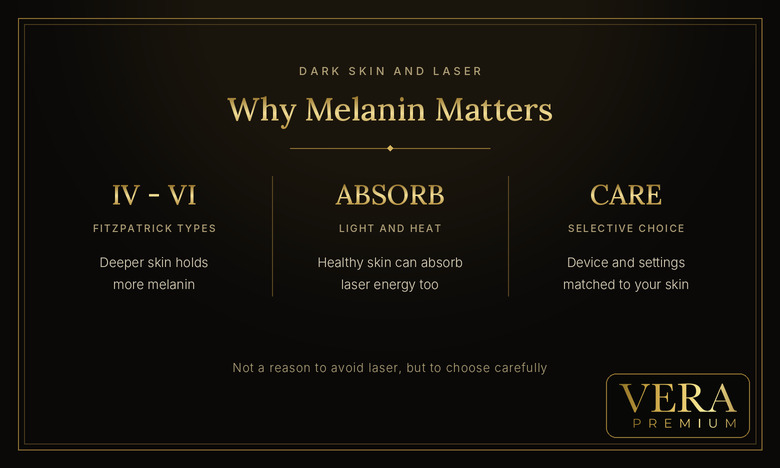
Melanin and How the Skin Reacts
Melanin is the pigment that gives skin its colour. Darker skin, often classed as Fitzpatrick types IV to VI, holds more melanin, including in the upper layers. A laser aimed at brown spots can also be absorbed by the melanin in the surrounding healthy skin. That extra absorption produces heat, and heat is what can irritate the skin.
For anyone considering pigmentation laser dark skin tone treatment in Cambodia this is relevant every day, because many patients have deeper skin tones and strong year-round sun. It is not a reason to avoid laser entirely, but it is a reason to be selective about who treats you and how.
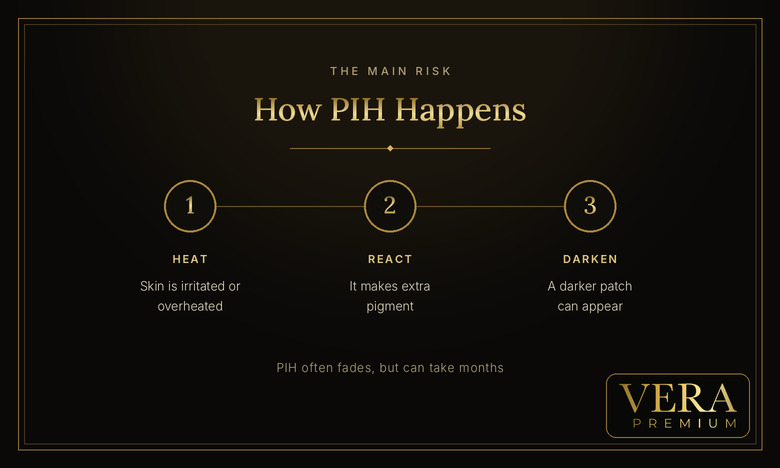
What Is the Main Risk: Post-Inflammatory Hyperpigmentation?
The best-known risk is post-inflammatory hyperpigmentation, or PIH. It happens when the skin, after being irritated or overheated, responds by making extra pigment. The result is a darker patch in the treated area. PIH often fades with time and careful care, but it can take months, and some people find it frustrating.
Other possible effects include redness, swelling, blistering and, rarely, lightening of the skin. A responsible pigmentation laser dark skin tone plan explains these risks in advance and lists what you should do if they occur.
How Does a Doctor Choose a Laser for Dark Skin?
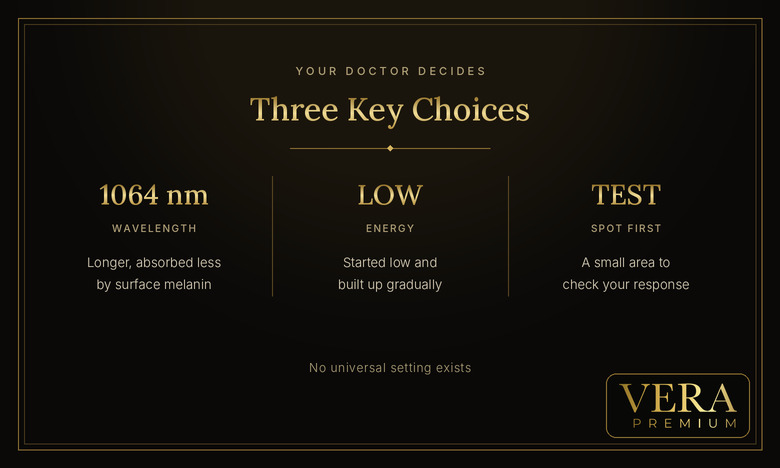
There is no universal pigmentation laser dark skin tone setting. The doctor weighs your skin type, the kind of pigment, its depth and your recent sun exposure. Here are the main decisions.
Wavelength and Energy Level
Longer wavelengths such as 1064 nm are absorbed less by surface melanin and reach deeper, so they are commonly considered for deeper skin tones. Energy is usually started low and built up gradually across sessions. Vera Premium offers the Fotona laser, a medical laser platform, which gives the doctor flexibility to adapt the approach to your skin.
Test Areas and Skin Assessment
Before treating a large area, the doctor may use a small test spot and review your response. They will also ask about recent tanning, medications, scarring history and any active skin condition. If your skin is irritated or freshly tanned, treatment may be delayed.
What Should You Ask Before Starting Laser?
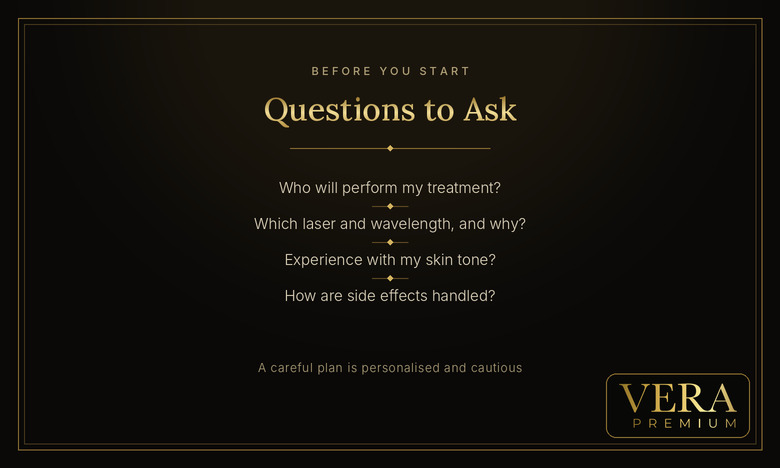
Good questions protect you. Ask who will perform the treatment, which device and wavelength they plan to use and why, whether they have experience with your skin tone, and how they handle side effects. Ask what a realistic outcome looks like and how many sessions are likely.
Be cautious about any clinic that promises to remove pigment completely in one visit, or that applies the same setting to every client. A careful pigmentation laser dark skin tone plan is personalised and cautious.
How Should You Care for Your Skin Before and After Laser?
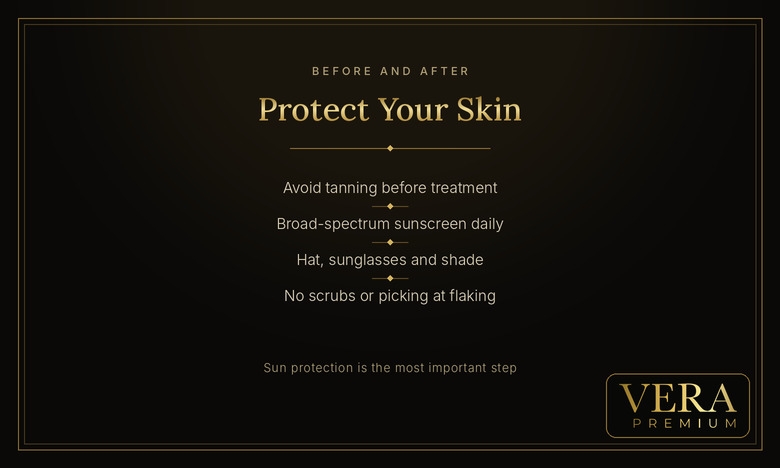
Preparation and aftercare are part of any pigmentation laser dark skin tone plan. Before laser, avoid tanning and follow any pre-care advice, such as pausing certain active products. Afterwards, keep the skin moisturised, avoid scrubs and heat treatments and do not pick at flaking.
Strict Sun Protection
Sun protection is the most important step. Use broad-spectrum sunscreen every day, wear a hat and sunglasses and limit time in direct sun and heat. Sun exposure after laser raises the risk of PIH, and it is also the fastest way to undo progress.
When Should You Stop and Contact the Doctor?
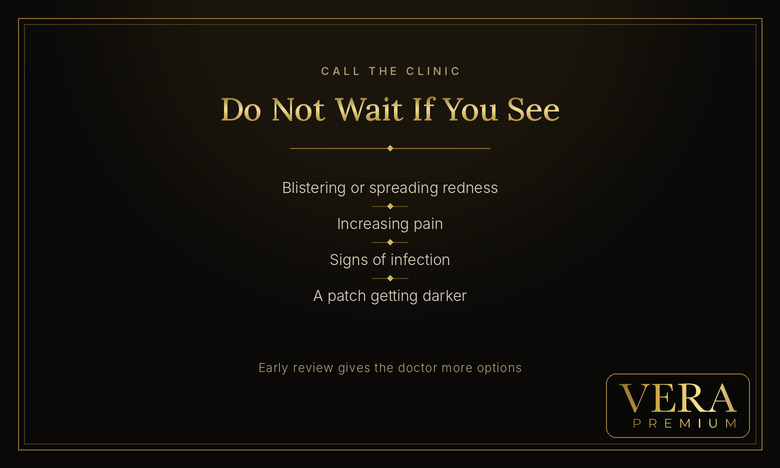
After pigmentation laser dark skin tone treatment, contact the clinic promptly if you notice blistering, severe or spreading redness, increasing pain, signs of infection or a patch that is getting darker. Do not wait to see if it settles by itself. Early review gives the doctor more options.
Pigmentation Laser Dark Skin Tone FAQs
Can Pigmentation Laser Make Dark Skin Even Darker?
It can if the wrong settings are used, which is why PIH is the main concern. Careful device selection, low energy and good aftercare lower the risk.
Which Laser Is Best for Dark Skin?
There is no single best laser. Doctors commonly consider longer wavelengths and conservative settings, and the final choice depends on your skin and pigment type.
Do I Need a Test Spot First?
Often it is recommended, especially if you have a history of dark marks or have not had laser before. The doctor decides after assessment.
How Long Do I Need Sun Protection After Laser?
Plan on strict sun protection throughout your treatment series and for the weeks afterwards, and keep up daily sunscreen long term.
Book Your Pigmentation Laser Consultation
If your concern is melasma, read our full guide to melasma treatment in Phnom Penh. For collagen and texture, see collagen stimulation laser treatment, and for the wider picture, our guide to skin rejuvenation technology.
To have the doctor assess your skin and recommend a plan, message Vera Premium on Messenger or Telegram, or call 0976 333 380. The clinic is at 225 St. 63 (corner of St. 334), Boeung Keng Kang I, Phnom Penh. This article is general information, not medical advice.