

Collagen stimulation laser treatment uses controlled light energy to encourage the skin to repair and rebuild itself, which can support better texture, firmness and tone over time. It is not a quick fix, and it is not right for every skin type or every concern. This guide from Vera Premium explains what collagen does, how the treatment works, how safe laser is for darker skin tones common in Cambodia, and what to expect from sessions and recovery.
What Is Collagen and Why Does It Decline With Age?
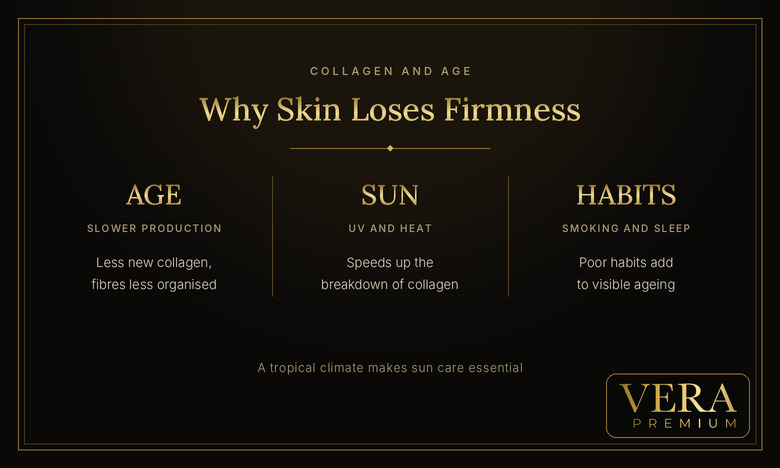
Collagen is the main structural protein in skin. It gives skin its firmness and helps it spring back after movement. From our late twenties, the body gradually produces less collagen, and the existing fibres become less organised.
Sun exposure speeds this up, which matters in a tropical climate. Smoking, poor sleep and repeated skin irritation can add to it. The visible result is skin that looks thinner, rougher or less bouncy, with fine lines that appear earlier and fade more slowly.
How Does Collagen Stimulation Laser Treatment Work?
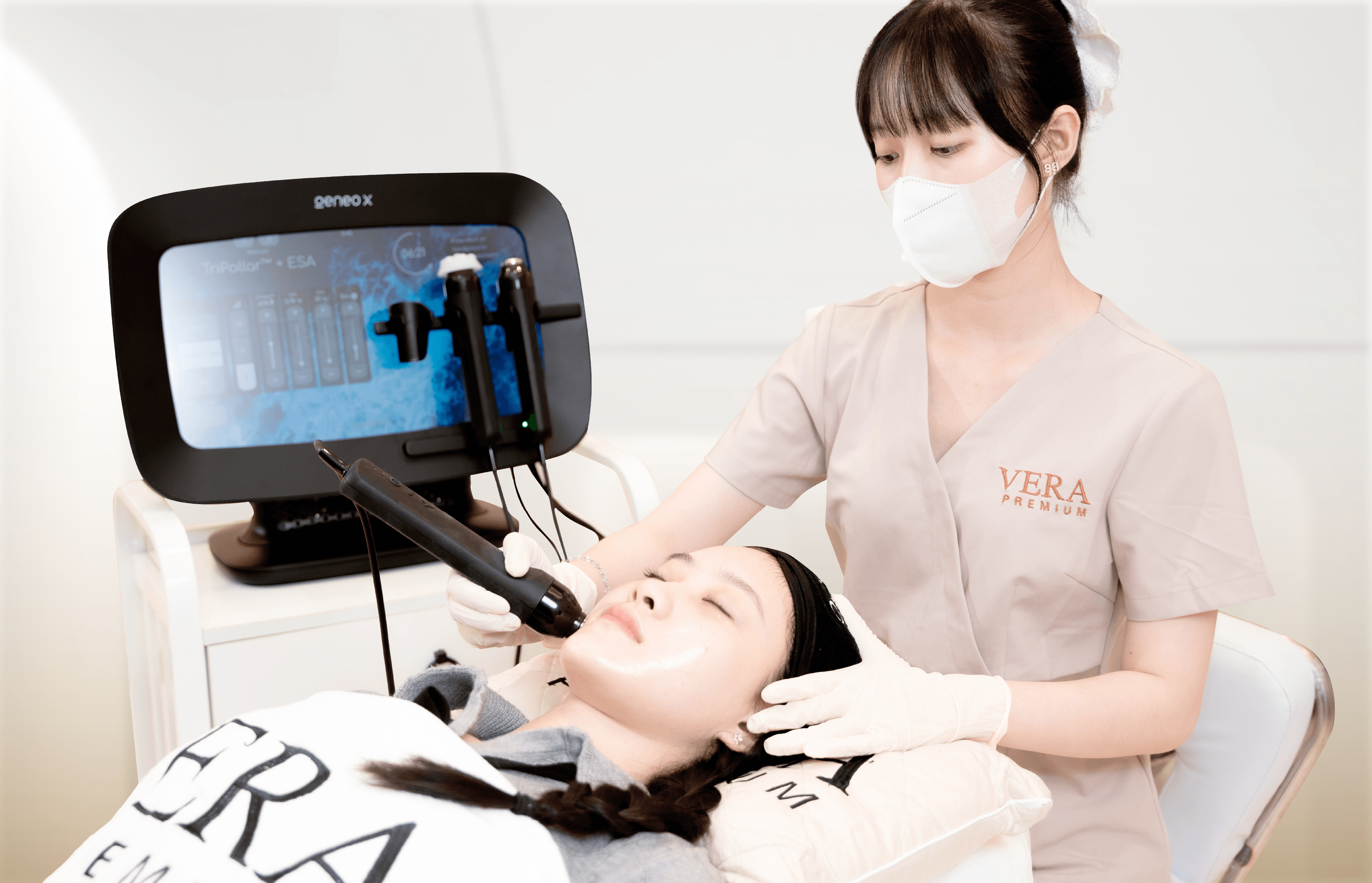
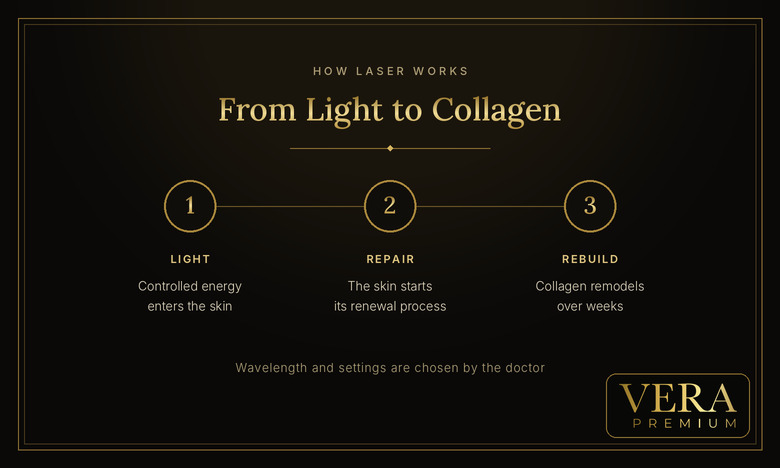
Medical lasers deliver precisely controlled light that skin absorbs as gentle energy. Used correctly, that energy prompts the skin’s natural repair process, including the activity of the cells that make collagen.
Light Energy and the Skin’s Repair Response
Different wavelengths and modes reach different depths, so the doctor chooses settings for your concern. Vera Premium offers the Fotona laser, a medical laser platform. For general background, see this overview of laser medicine.
The skin responds over the weeks after treatment, which is why collagen stimulation laser treatment is judged gradually and not on the day. The doctor confirms the exact protocol for your skin after assessment.
Which Skin Concerns Can It Support?
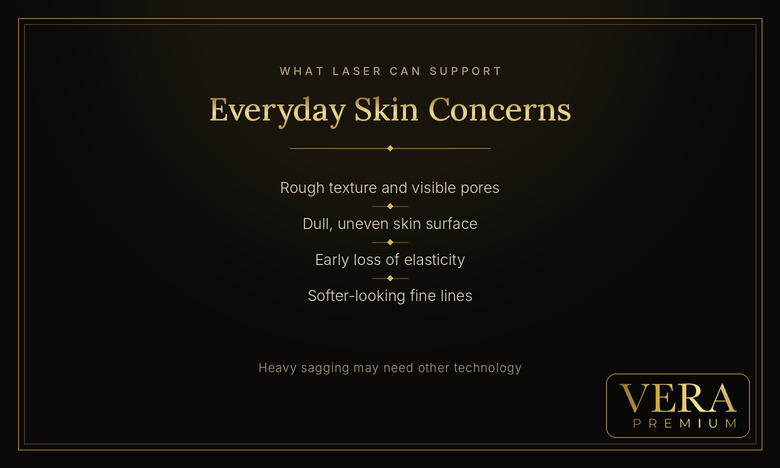
Laser-based rejuvenation is used for several everyday concerns, and the plan depends on which matters most to you. It works best as part of a plan that also includes sun protection and gentle skincare, rather than as a stand-alone fix.
Rough Texture and Visible Pores
As the skin renews and remodels, the surface can look smoother and more even. Many people choose laser mainly for texture and a fresher look.
Elasticity and Fine Lines
Better collagen activity can support firmer-feeling skin and softer fine lines. Deep lines and heavy sagging may need other approaches, such as radiofrequency or HIFU, and the doctor will say so honestly.
Is Laser Safe for Darker Skin Tones?
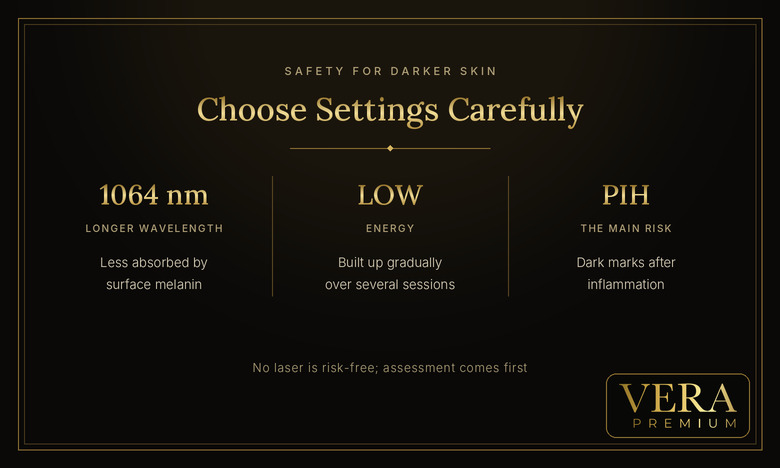
It can be, with the right device, wavelength and settings. Darker skin contains more melanin near the surface, and melanin absorbs laser light, so a poorly chosen setting can cause post-inflammatory hyperpigmentation (PIH), a dark mark that is hard to treat. No laser is risk-free.
Before collagen stimulation laser treatment, the doctor may recommend a small test area and will review your history of pigmentation, scarring and sun exposure. Tell the doctor about recent tanning, any active skin condition and any medication you take, including isotretinoin.
Longer wavelengths such as 1064 nm are absorbed less by surface melanin and are commonly considered for deeper skin tones. Read our detailed guide to pigmentation laser safety for dark skin tones and our guide to melasma treatment in Phnom Penh.
What Is the Process, Sensation and Recovery?
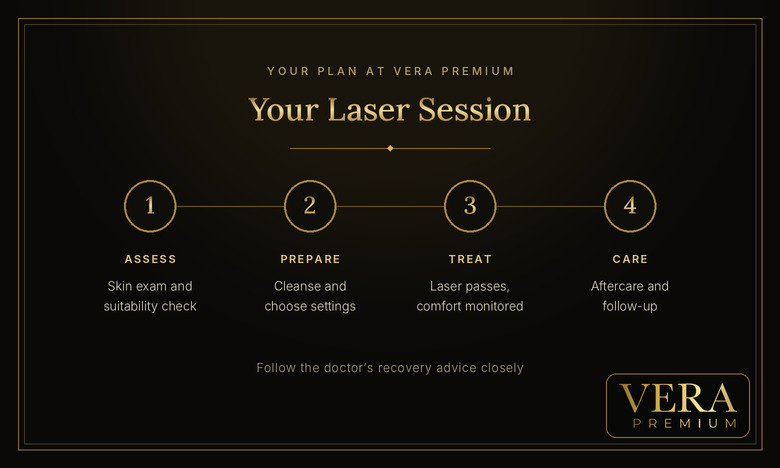
A session at Vera Premium follows four steps. 1. Assess. The doctor examines your skin and checks for anything that makes laser unsuitable. 2. Prepare. Your skin is cleansed and settings are chosen. 3. Treat. Laser passes are delivered while your comfort is monitored. 4. Care. You receive aftercare instructions.
Most people describe warmth or a light snapping feeling. Mild redness is common and often settles within hours or days, depending on the settings used. Follow the doctor’s instructions closely, because careful recovery protects your results.
How Many Sessions Do You Need, and How Do You Maintain Results?
There is no single number. Many collagen stimulation laser treatment plans use a series of sessions spaced weeks apart, then occasional maintenance. The doctor adjusts the plan as your skin responds.
Maintenance is mostly everyday care: sunscreen, gentle skincare and regular check-ins. Results fade as ageing continues, so think of laser as part of a long-term routine rather than a one-off event. Be wary of any clinic that sells a fixed collagen stimulation laser treatment package without examining your skin, because the right number of sessions depends on how you respond.
How Should You Protect Your Skin After Laser?
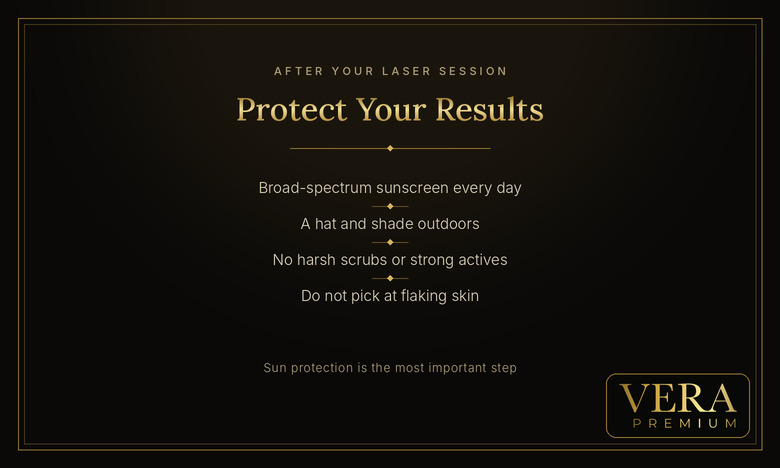
Sun protection is the most important step. Use broad-spectrum sunscreen every day, wear a hat outdoors and avoid long hours in direct sun and heat. Avoid harsh scrubs and strong active ingredients until the doctor says your skin is ready, and do not pick at any flaking.
Collagen Stimulation Laser Treatment FAQs
Does Laser Hurt?
Most people feel warmth or light snapping. Comfort varies, and the doctor adjusts settings to your tolerance.
Can Laser Leave Dark Marks or Long-Lasting Redness?
These are possible risks, particularly if settings are wrong or sun protection is skipped. A careful assessment and good aftercare reduce the chance.
How Soon Will My Skin Feel More Elastic?
Skin often looks fresher first, while firmness develops gradually over weeks. Results vary between people.
Can Laser Be Combined With RF?
Often yes. The doctor plans the order and spacing so the skin has time to recover between treatments. For the full picture, see our guide to advanced skin rejuvenation technology.
Book Your Collagen Stimulation Laser Treatment Consultation
The right collagen stimulation laser treatment is chosen after an honest assessment of your skin tone, concerns and lifestyle. This article is general information, not medical advice. To have the doctor assess your skin, message Vera Premium on Messenger or Telegram, or call 0976 333 380.
The clinic is at 225 St. 63 (corner of St. 334), Boeung Keng Kang I, Phnom Penh.